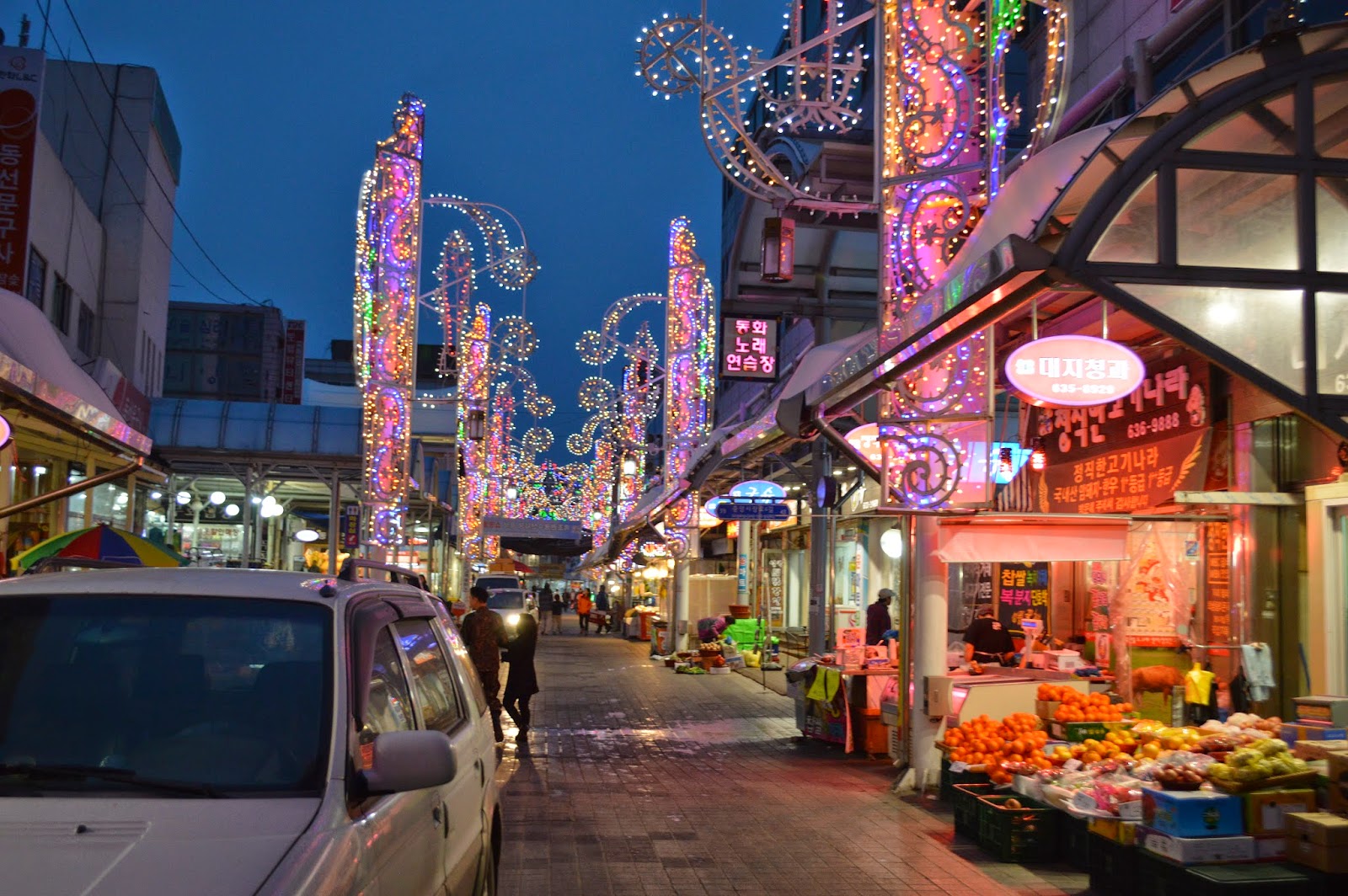
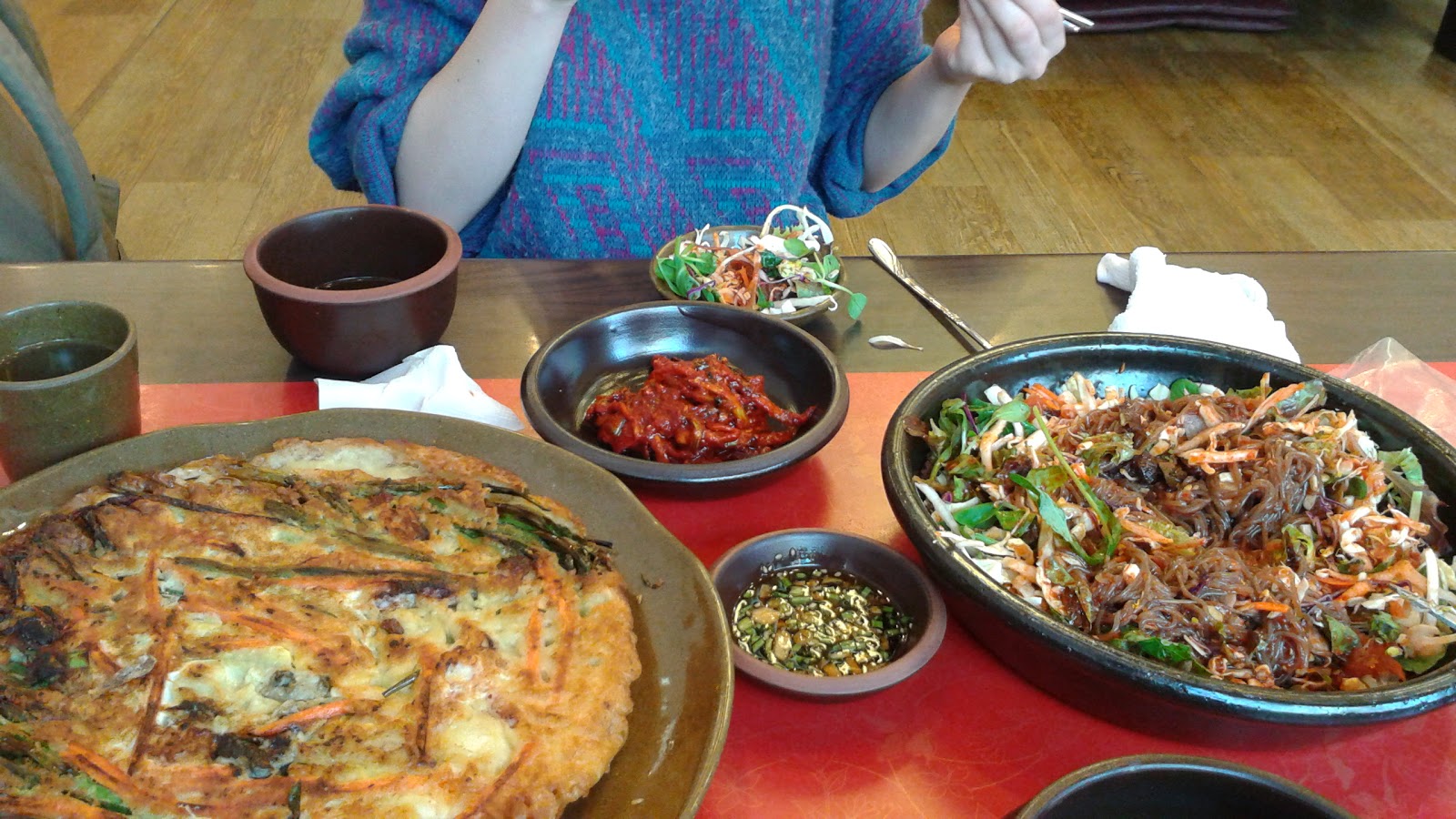
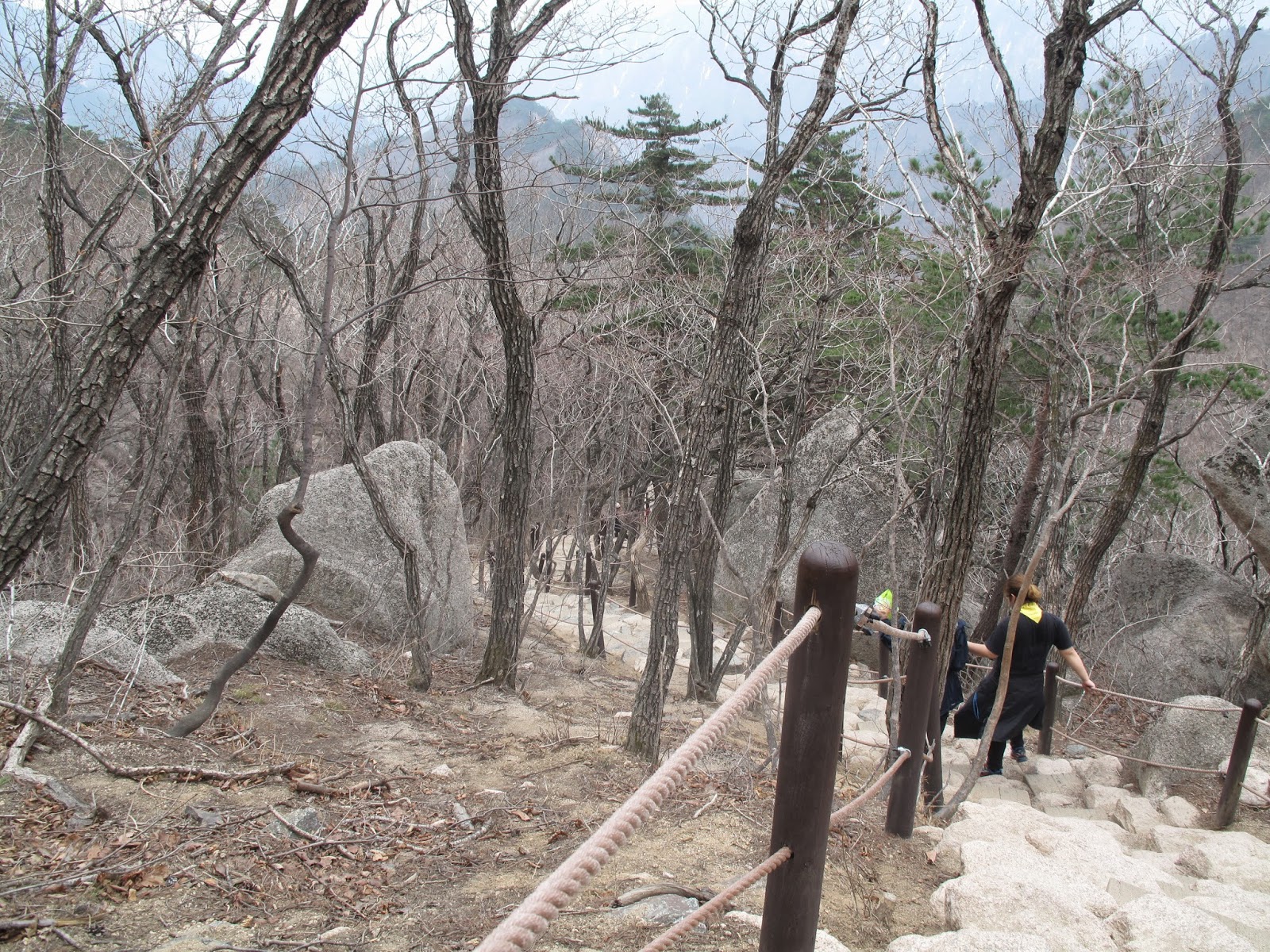
What I don't want this to be is a Shit List of Stuff That Sucks. It's for anyone potentially interested in Korea. And for me to explain away my discord. Being abroad is a strange, surreal and often difficult thing. Most of the items on the list apply in general, some of them are specific to Korea for a USian.
By being abroad you totally undermine your footing in hopes of rediscovering it. For me, footing is home: my family and friends, chatting with strangers (which doesn't much happen here), having thoughtful conversations, cracking stupid jokes, speaking my own language. I'm far away from that now, so I try not to dwell on the negative. Shedding a different light or candle or beam always helps, so none of this stuff is insurmountable. Here goes
1. It is not pleasant to be isolated, different, foreign.
But I suspect my non-white friends here can attest to different experiences, as they have dealt with being different, being the other already in white-dominated societies. I have seen white bloggers say they are the other in Korea, which is not really accurate. I suppose Asian people far outnumber western/white people, but to say that you are other implies more than just looking different. The reason westerners are not the other here is because their worldview is not, will not ever be marginalized. White folks here also don't have to fight for their humanity, or against systematic oppression- which are the key features of being other in a racist society like America.
So to all westerners, of races and nationalities: In Korea you may feel out of place, but you will not face discrimination.
Are Koreans racist? Many white people here will assure you, yes they are. But the answer is no, Korea is not a racist country. Koreans will not dehumanize you for not being Korean. Of course, this is a complex issue here. Korean mass culture is a victim of colorism (anti-blackness) and Corporate-Thin White Standards of Beauty, problems on their own that do come into the general perspective. And while some Korean people hold prejudice from never having met a non-Korean person their whole lives, the fact is there is not a violent, legitimized discrimination in place against white people, or black people. The stereotypical imagery of the media creates some misconceptions but it doesn't drive people to actually act differently toward you. Koreans might stare at you, that's about it.
You do have to confront the image of white people being loud, violent, and lazy. I have to say, this stereotype is not dangerous or damaging to us, and is in place because of the abuses of Korea/Koreans by the US military. It's a stereotype based on survival.
And it exists because we are that way, all the time. I hate to say it but I hate the reality more. Overall the teachers in my program are good, but too many of them come here to party and don't show any respect for the country whatsoever, like it's a playground with cheap alcohol. I like drinking too but the level of beligerance can reach into the stratosphere here when you have any more than like two white guys drinking alcohol. The worst case of this was during orientation, after our long day of lectures Claire and I went to the closest bar. The crowd of teachers became so loud I actually had to plug my ears and leave the place ashamed. They were screaming and chanting like a bunch of band camp kids. That this is the image of English teachers in Korea causes me grave concern, but there isn't much I can do except show respect and engage with Koreans in my own quieter way. It's a total bummer, but if our reputation sucks, we deserve it.
Some discrimination does exist here, from what I have read if you are South East Asian in Korea, you may have a little more of a negative stereotype to confront. South Asians look different enough to be foreign from Koreans. A lot of Korean men "import" brides from South Asia, which I don't even understand but it creates some tension (not to mention that it's basically sex trafficking). Foreign workers face some of the same "illegal immigrant" xenophobia that we have from wingnuts in the US against Central Americans. I have no idea how it plays out, but foreign workers here tend to be South Asian, Chinese and Turkish. So be aware, but like I said Koreans are overwhelmingly kind people. Japan also has a negative reputation for it's occupation and colonization of Korea. I don't quite see that extending to Japanese people, but maybe it is there.
In general, Koreans are loving people who welcome you in peace and harmony and they have no where near the system of oppression of people of color that exists in the west. If you are white/western/person of color you may feel ostracized. But it is cultural curiosity, not systematic racism. Gawks, stares, and surprise are by far the most common reactions to foreigners in Korea. That's about it.
If you don't know any of the Korean language, this alienation will be made much worse. If you live in Korea, learn to speak even a little Korean. It's hard, it's really really hard, but it goes a long way in showing that you appreciate and try to offer your time and efforts. I will make a post soon about the trails and errors of learning a language. So, I'm trying to adapt and I have come a long way. I'm not conversational in Korean but I can use very basic words to prevent myself from dying. Good start.
So to all westerners, of races and nationalities: In Korea you may feel out of place, but you will not face discrimination.
Are Koreans racist? Many white people here will assure you, yes they are. But the answer is no, Korea is not a racist country. Koreans will not dehumanize you for not being Korean. Of course, this is a complex issue here. Korean mass culture is a victim of colorism (anti-blackness) and Corporate-Thin White Standards of Beauty, problems on their own that do come into the general perspective. And while some Korean people hold prejudice from never having met a non-Korean person their whole lives, the fact is there is not a violent, legitimized discrimination in place against white people, or black people. The stereotypical imagery of the media creates some misconceptions but it doesn't drive people to actually act differently toward you. Koreans might stare at you, that's about it.
You do have to confront the image of white people being loud, violent, and lazy. I have to say, this stereotype is not dangerous or damaging to us, and is in place because of the abuses of Korea/Koreans by the US military. It's a stereotype based on survival.
And it exists because we are that way, all the time. I hate to say it but I hate the reality more. Overall the teachers in my program are good, but too many of them come here to party and don't show any respect for the country whatsoever, like it's a playground with cheap alcohol. I like drinking too but the level of beligerance can reach into the stratosphere here when you have any more than like two white guys drinking alcohol. The worst case of this was during orientation, after our long day of lectures Claire and I went to the closest bar. The crowd of teachers became so loud I actually had to plug my ears and leave the place ashamed. They were screaming and chanting like a bunch of band camp kids. That this is the image of English teachers in Korea causes me grave concern, but there isn't much I can do except show respect and engage with Koreans in my own quieter way. It's a total bummer, but if our reputation sucks, we deserve it.
Some discrimination does exist here, from what I have read if you are South East Asian in Korea, you may have a little more of a negative stereotype to confront. South Asians look different enough to be foreign from Koreans. A lot of Korean men "import" brides from South Asia, which I don't even understand but it creates some tension (not to mention that it's basically sex trafficking). Foreign workers face some of the same "illegal immigrant" xenophobia that we have from wingnuts in the US against Central Americans. I have no idea how it plays out, but foreign workers here tend to be South Asian, Chinese and Turkish. So be aware, but like I said Koreans are overwhelmingly kind people. Japan also has a negative reputation for it's occupation and colonization of Korea. I don't quite see that extending to Japanese people, but maybe it is there.
In general, Koreans are loving people who welcome you in peace and harmony and they have no where near the system of oppression of people of color that exists in the west. If you are white/western/person of color you may feel ostracized. But it is cultural curiosity, not systematic racism. Gawks, stares, and surprise are by far the most common reactions to foreigners in Korea. That's about it.
If you don't know any of the Korean language, this alienation will be made much worse. If you live in Korea, learn to speak even a little Korean. It's hard, it's really really hard, but it goes a long way in showing that you appreciate and try to offer your time and efforts. I will make a post soon about the trails and errors of learning a language. So, I'm trying to adapt and I have come a long way. I'm not conversational in Korean but I can use very basic words to prevent myself from dying. Good start.
That was a rant. Sorry not sorry.
The point is: feeling different is tough, sometimes you want to run away.
P.S. guess what, people of color deal with this feeling PLUS legitimized oppression in the West on a daily basis. So for me, being different here is no big deal. But if you are interested in hearing those complaints visit waygook.org for some whiny whiteys and ethnocentric people ranting about Korea. 외국인 waygookin means foreigner.
2. Contradiction is a part of life. It's pointless to point fingers but hard not to sometimes.
 |
| It's not all rosy. Actually, yes, it is. It is all rosy. At least in 강릉 |
2. Contradiction is a part of life. It's pointless to point fingers but hard not to sometimes.
Korea is very green, mountainous and serene. But pollution and waste is a major, depressing, almost insurmountable problem. The two realities both exist, as do many other contradictory facts of life in Korea.
I've noticed the exact same thing happening in our idea of America- it has the best and the worst. It's possible to hear two completely different, equally as emphatic stories about a country. You have to account for differences of opinion, which happens everywhere.
Impurity, hypocrisy, inconclusive trends. Get used to it.
No one can be expected to be totally consistent, those people are usually fundamentalists of some form. You can only be genuine.
You also can't have a meaningful understanding about a place/thing unless you really have a motivated effort to learn. And that involves, if you ask me, not blogs (yeah) or traveler's stories, or anecdotes, or banal conversation, but a focused reading of legitimate literature, in print and online. Otherwise, geographic discussion tends toward gossip and stereotype.
That said, mutually exclusive realities exist. Totally hypocritical accounts exist because life is not always easily explained. Korea is really contradictory at times.
The Chill Korea
It's common in offices to wear slippers when you get to work, only putting on your best shoes for the stroll to work and back home. People flip flop around all day, wearing dope suits. It's cool. Tom Haverford would not approve.
Offices here also go out to drink and eat in merriment on weekdays. Weekday binge drinkging/eating is more the norm than the weekend type we do back home. Drinking culture is extremely pervasive and acting a drunken fool is absolutely fine. It's part of life. (I've noticed while drinking or during meals is really the only time Koreans let loose)
In general people are pretty chill, friendly, calm, willing to listen, smile, leave you in peace. Traditional food takes a while to make, ferment, stew. Harmony and balance are big parts of the national identity. See the Korean yin-yang flag. I can go hike up in the woods anyday I want. And I do, most days of the week.
Buddhism and Neo-Confucianism stress peace and rational thinking. I love that.
Buddhism and Neo-Confucianism stress peace and rational thinking. I love that.
The Cut-Throat Korea
There is also another side of Korea that reminds me of home, in a bad way. It comes down to the fact that they're both industrialized. There is a certain impatience. Cars go pretty fast all the time and fly down alleys by schools with children and pedestrians. Congestion is also a part of life too, so crazy traffic is a given. Don't get me started on the buses. The Sewol tragedy perhaps highlights this, but it is erroneous to claim anything other than Free Market Capitalism caused the accident. The hurry hurry lifestyle is entirely the making of capitalism. Another day another buck.
Lines, like waiting to by a bus ticket for example, are sometimes free for all. Line queues do not function with the concept of cutting like in the West. Just kinda go to the front.
I don't want to paint a broad brush about daily life here, but I think most Koreans will agree that the pace of life is very fast.
So if you want to go somewhere, do the research. Claire and I did some exhaustive/exhausting research about Korea and the culture before arriving here, which helped a lot. Still, there are constant, mostly insignificant, flare ups that make me confused. Like, why is Korea this way? Asking questions like this is inevitable abroad, but it goes sometimes beyond inner dialogue into frustration, aggravation. So you have to be empathetic.
People love their country and their culture wherever you are. They go to work, speak their language, and their home is mostly all they know. Life goes. Nowhere one earth is free of social-political-economic problems.
Don't ask for consistency. Compare, contrast, but don't make demands. Accept. I need to remember this.
 |
| Jiktang Falls- "The Niagra Falls of Korea." Chill Korea |
3. Korea is not westernized. Korea is a "high context" culture.
For counter-reference: the West, the USA have a low-context culture. Meaning: we prefer direct yes/no question and answer. We like to be told exactly what to do, what is expected. We praise individual effort and achievement instead of group or team goals. Context is never totally agreed upon because differences in perspective come into play. We have to talk about the "context" because we have fluid, individualistic ideas and the context is really low, sometimes gone entirely, unless explicitly stated.
Inversely, Korean culture is high context: the context is always very developed in a pre-determined way, deeply embedded, very unspoken, totally understood without direct meta-conversational speech (no what are we talking about? questions). Group expectations are already givens, from boss-worker hierachy or age heirarchy. Direct yes no questions are avoided, from a context of respecting and saving face. It makes sense but it sounds authoritarian or weird when you write about it. I actually really like the levels of formality. I love bowing to coworkers and elder Koreans, it's fun. You can even bow from a passing car or bow to people driving past you.
But as for the lack of direct conversation, and lack of demands made on you as an individual--It's really really hard to get used to this in a workplace. What I am expected to is a constant challenge. Being ready and proactive is helpful. My co-teachers are all very thoughtful and lovely people who are aware of cultural miscues from the beginning. It's actually really fun to discuss cultural differences. Living through them, ehhh, not so much.
Takeaway: Learn (basic) Korean (or the main language of the place you are visiting)
4. Food inconveniences
Number four is alternately titled: Do Not Come To Korea If You Are Vegetarian/Vegan. Or seriously reconsider it.
I mean, unless you really wanna go through the trouble. Trouble, in this case means- having to explain every time you eat with other people why you're not eating meat; cooking your own food and bringing it to School/work (non-meat protein is limited to tofu, nuts, milk, and a tiny selection of legumes); and painstakingly researching Korean food vocabulary and the small portion of Korean traditional food without meat or meat broth.
I mean, unless you really wanna go through the trouble. Trouble, in this case means- having to explain every time you eat with other people why you're not eating meat; cooking your own food and bringing it to School/work (non-meat protein is limited to tofu, nuts, milk, and a tiny selection of legumes); and painstakingly researching Korean food vocabulary and the small portion of Korean traditional food without meat or meat broth.
You're in a foreign country- no surprise that foreign food and ingredients are hard to find and expensive. It really wears you out some days, other times it's manageable. You, meaning a potential person abroad.
Western food here is basically waffles, pizza, and hamburgers. The main qualm I have is the massive, inescapable quantities of meat. So much meat, all the time. I was pretty dedicated to being vegetarian before I came and it's just not feasible here, unless I cook my own meals everyday. So, I eat no meat in my home cooking, and at school where I have lunch five times a week, I try to skimp if not skip the meat altogether, but it can't always be done because it's usually like a stir-fry mix of meat and vegetable.
 |
| This is the food I cook at home- fresh pea hummus, rice dumplings (not homemade) and sauteed garlic scapes. It was supreme. |
Korea does have vegetarian dishes, some of which are almost meatless. Also, not eating meat is a vital part of Buddhism, but the western vegan/vegetarian lifestyle is not easily accessible, not easy to partake in.
Lastly, I REALLY MISS GOOD BEER and Mexican food. Korean beer is all very okay, foreign food amounts to Chinese-Korean food and an occaisional sushi place. And pizza, which is everywhere, and not bad just very cheesy. But somehow cheese is really expensive. I forget what hops tastes like.
Lastly, I REALLY MISS GOOD BEER and Mexican food. Korean beer is all very okay, foreign food amounts to Chinese-Korean food and an occaisional sushi place. And pizza, which is everywhere, and not bad just very cheesy. But somehow cheese is really expensive. I forget what hops tastes like.
5. Traveling around the country can be difficult
This depends on where you live in Korea, your budget, and your preferred method of transportation. Bikes are cheap, so are cars and some buses. Traveling time adds up quick. Transfers can be stressful. Public transit is pretty cheap and timely but you have to make your way to main hubs. I live at the furthest extreme from any hub. I'm closer to North Korea than any South Korean city worth mentioning. I like the rural vibe. I can go hiking up a beautiful mountain right in my back yard anytime I want. It's awesome.
Getting to the far South of Korea, which has the next major city Busan, and nice islands and parks is almost a journey itself. We'll get there someday. I suspect your willingness to travel bumpy bus rides and long train trips is key. The bus rides remind me of the Hocking Hills in Ohio- beautiful but vomit inducing, long, and windy. Claire and I both agreed we'd rather save some money and spare ourselves the discomfort of a 5 hour journey to get to the beach, or wherever. So far, we have only been around our province and Seoul- a small portion of all there is to see. But that saved money and time goes to finding cool stuff nearby and future big travel plans.
[I posted this a week ago and want to add an EDIT: My health has been completely wrecked since coming here, consistently. I have had a nonstop sinus infection and ear/headaches for the entire time I've been here. I don't know for sure the cause, but I have a good hunch that it's air pollution. The air pollution is terrible some days. I am afraid of having long term health issues. I don't know for sure if the pollution is the cause, but my lifestyle choices if anything have been a lot more healthy since I came. Pollution issues vary depending on where you are in Asia, and your own allergies but this is something to consider before you come here. I wish I had. I feel better since I started taking lots of homeopathic herbs instead of the immunity-threatening anti-boitics the doctors gave me.]
Getting to the far South of Korea, which has the next major city Busan, and nice islands and parks is almost a journey itself. We'll get there someday. I suspect your willingness to travel bumpy bus rides and long train trips is key. The bus rides remind me of the Hocking Hills in Ohio- beautiful but vomit inducing, long, and windy. Claire and I both agreed we'd rather save some money and spare ourselves the discomfort of a 5 hour journey to get to the beach, or wherever. So far, we have only been around our province and Seoul- a small portion of all there is to see. But that saved money and time goes to finding cool stuff nearby and future big travel plans.
[I posted this a week ago and want to add an EDIT: My health has been completely wrecked since coming here, consistently. I have had a nonstop sinus infection and ear/headaches for the entire time I've been here. I don't know for sure the cause, but I have a good hunch that it's air pollution. The air pollution is terrible some days. I am afraid of having long term health issues. I don't know for sure if the pollution is the cause, but my lifestyle choices if anything have been a lot more healthy since I came. Pollution issues vary depending on where you are in Asia, and your own allergies but this is something to consider before you come here. I wish I had. I feel better since I started taking lots of homeopathic herbs instead of the immunity-threatening anti-boitics the doctors gave me.]
 |
| Daengwang-ri. Amazing town on the train line. |