Part 1
Some ashy gray background
I went to Mongolia last October. Reflecting on it, October seems like a bad time to visit such a northern country, especially considering we only had a long weekend. And due to wind delays pushing our flight back 12 hours, we basically just had a weekend.
Despite the logistical hangups and lack of a tight plan, the trip was amazing. There are cheap, daily flights to Ulaanbaatar from Seoul. The opportunity to visit wasn't going to come by again so easily so I pounced.
 |
| The hostel had the option to stay in gers, we opted for indoors since we arrived at 2 a.m. Oasis Hostel gets my recommendation. |
The decision to visit came as the result of using skyscanner.com and looking for cheap flights out of Korea. I recommend the website if you don't have a planned destination because it lets you search for the cheapest flights from your location to anywhere. Mongolia looked good by comparison. I booked the flight and the hostel.
Just in time for arriving, I finished reading Genghis Khan and the Making of the Modern World by Jack Weatherford. The biography (by one of my favorite non-fiction authors) really illustrates how revolutionary Khan was. By the end of the book, I understood the strategic brilliance and unprecedented human rights conditions of the Mongol empire.

Did I say "human rights" and "Mongol empire" in the same sentence? Yes.
Besides conquering in 40 years more than Romans did in 200, the Mongols had a disciplined, honorable way of life. They outlawed slavery and sex-slavery. Women were given far more control over their lives than in most of the other parts of the 13 century world. The Mongols outlawed torture, and the death penalty. Genghis Khan also knew the power of a free press and freedom of religion. He fostered a religious freedom that was completely unmatched anywhere else in that period- and even today.
Some of these policies are what helped the steppe people reach great new heights. Their original life ways have sort of remained intact, sort of.
 |
| They got damn good food. And like most of Asia, it is extremely cheap. |
Khan also had a great love of stuff, he wanted to open up trade routes and get more fancy things because the Mongols had so little. This would regress into a form of greed that would be the undoing of his successors, but the trade routes and international relationships he forged helped pave the way for Pax Mongolica- a long period of peace.
The empire splintered over the centuries, Beijing was actually founded by Khan's grandson, Kublai Khan. Mongolia was mighty, but a little less mighty over that time.
Unfortunately, the Soviets suppressed Mongol independence for decades and really tried to erase the great legacy of Genghis Khan. Long story short, they blew it, and now Mongolia is stuck between free consumer capitalism and the hollowed out remains of communism. A precarious position for sure.
 |
| The capital, Ulaanbaatar usually gets a bad rap. I found it delightfully garish. |
Mongolia is the 19th largest country, but the population is only about 3 million, half of the people live in the capital.
I don't imagine many people come to Mongolia for the city life. Nonetheless, the center of the city was pretty vibrant and congested with cars and trucks. I remember seeing a lot of Toyota Prius hybrids. There were a lot of abandoned or incomplete looking apartment buildings and what I'm guessing were factories. The skeletal reminders of the cold war, perhaps. I can certainly imagine Westerners or people unaccustomed to less-industrialized countries seeing the place as horrible to look at. I didn't feel that way though. It was pretty relaxed, despite the hubbub.
It was interesting to hear our tour guide speak about his experiences with communism. He mentioned his grandparents actually missed the old days when the community was closely bound together. More on him later.

On the edge of the city people live in gers, albeit in a sedentary way. Part of the genius of the Mongol empire was its ability to turn its nomadic life way into a war tactic. Khan turned his strengths into weaknesses. The nomadic herding way of life is quickly becoming a weakness in 21st century Mongolia, but it does still exist in the countryside.
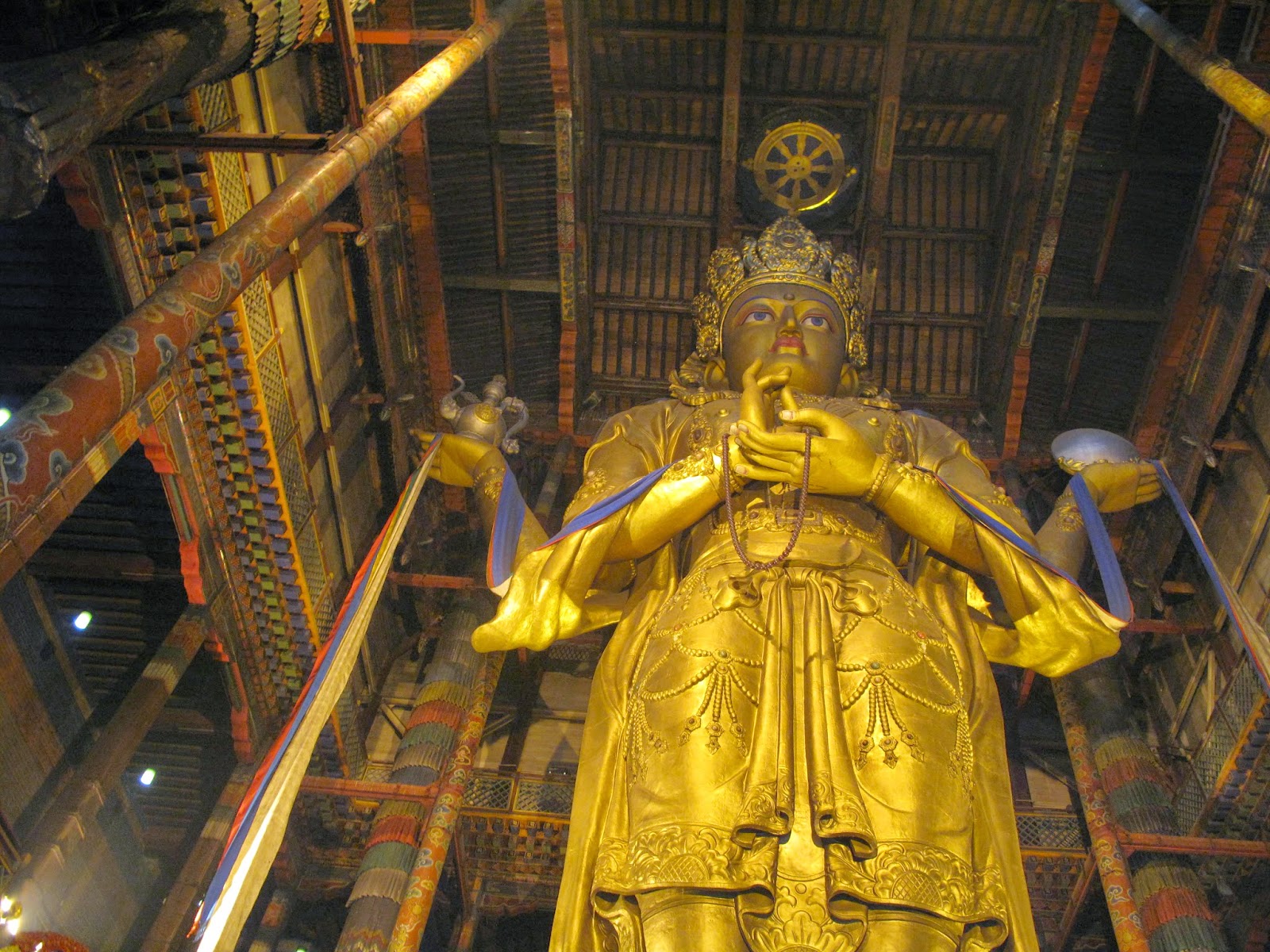 |
| This was at Gandan Monetary, an amazing place. One of the largest Buddha statues I have ever seen. |
Part 2
Why Tour Guides Are Underrated
I never appreciated the benefits of a tour until I started traveling outside of America. In that case you really need someone to bring the place into context. I don't mean a tour group, per se, since that is a lot like being on a field trip with adults. If you get the chance to hire a private guide (which sounds fancy, but it's really informal, and usually cheap), do it. Your experience will be much more rewarding.

After a day in Ulaanbaatar, we ventured out to Terelj National Park and the largest equestrian statue in the world. The same driver who our hostel arranged for our airport pickup became our guide again. He was a gentle, intelligent man who spoke English almost without an accent, in addition to 4 other languages. We arrived at the Genghis Khan statue before it opened up, so we took a little drive around.

The beauty was expansive, rugged and a cold. The photos explain better than I can.

 |
| One of my heroes. |
 |
| The monument had a nice museum inside. I highly recommend it for history nerds. |
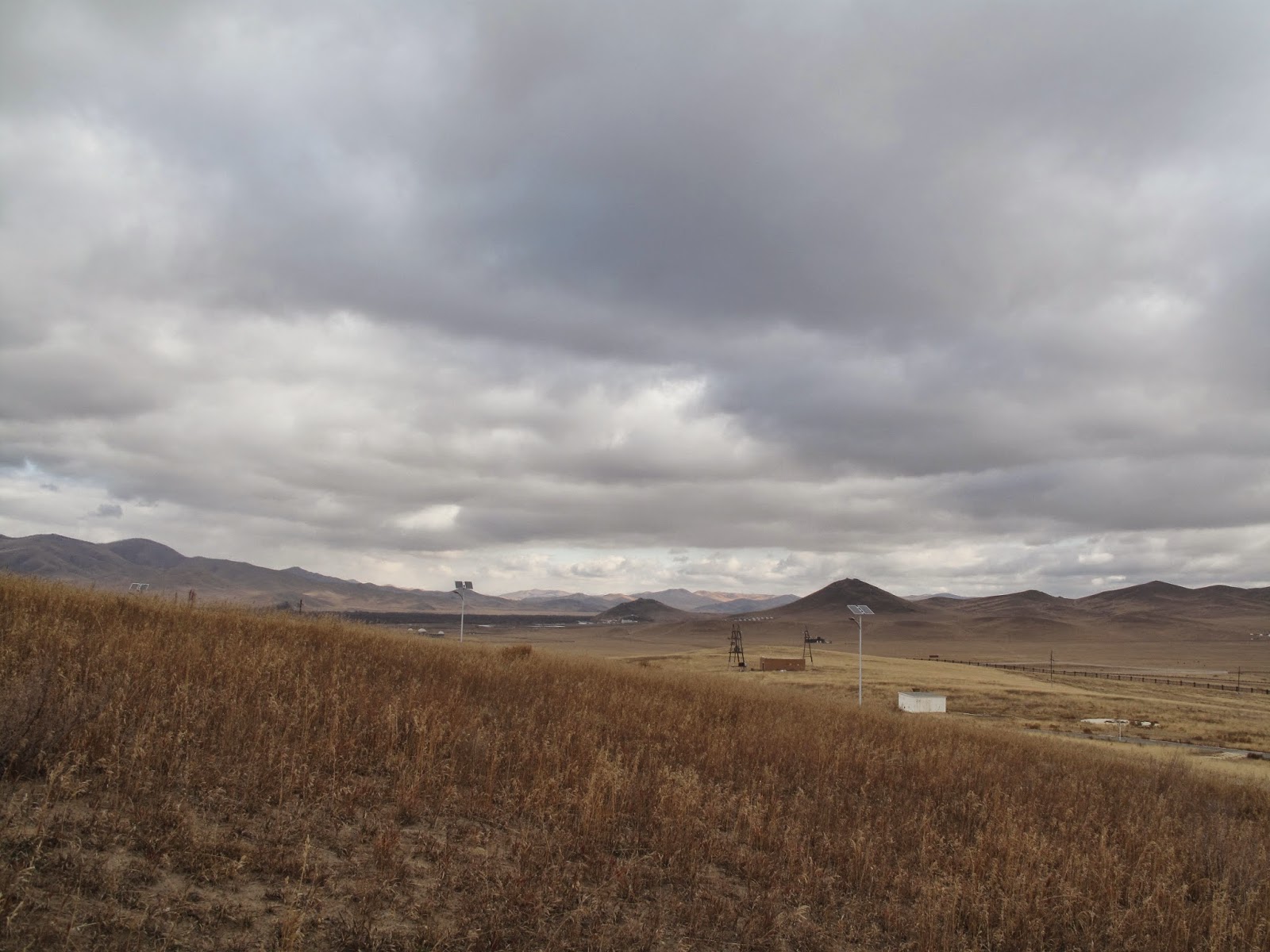 |
| This would be green in the summer, but I still found it stunning. I suppose this might look drab to some eyes. |
Terelj National Park is basically the main tourist excursion of the region, about 90 minutes outside of Ulaanbaatar. The park was dotted with empty tourist camps and full of yaks and cattle grazing freely.
It's not only worth the trip outside of the capital, but it really made the vacation feel complete. The respiring winds and vast, austere silence were the perfect counterpoint to the struggles I was facing back in Korea.
 |
| This was a beautiful bathroom |
 |
| The Siberian pine is apparently not evergreen |
 |
| These meditative signs dotted the path up to the mountain temple. You'll notice everything is in Cyrillic and not the vertically-written Mongol script (another Khan invention). |
I still got a very strong sense of religious freedom in Mongolia, even though the only visible religion was Buddhism. Our tour guide spoke of his studies of Sanskrit in India. He shared the basic ideas behind the rituals like spinning the drums in the temple, and the meaning behind the symbols we found. He said he respected all religions, I agreed completely.


Saying good bye


